
Practice this guide
Timed holds and releases — follow the rep counter in the mirror.
Face Yoga Guide
Side-Neck Bilateral Massage
Side-Neck Bilateral Massage uses light two-hand strokes along the side neck toward the jaw angles for four-second comfort cycles across eight reps. It releases desk-related side-neck tension without throat-midline pressure. Skip acute injury and stop if dizziness appears.
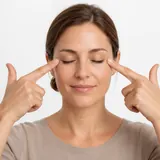
On the cover, both hands rest on the sides of the neck with fingers pointing up toward the jaw angles, eyes softly closed. This side-neck bilateral massage is a comfort stroke drill—different from Platysma Band Strength Hold (isometric tone) and Neck Tilt Platysma Stretch (head-back lengthening).
Technique
Sit tall or slightly recline with shoulders soft. Place both hands on the sides of the neck as on the cover—pads along the sternocleidomastoid neighborhood, fingers angled toward the jaw angles. Use about 2/10 light pressure and make slow upward-then-downward comfort passes for four seconds. Release two seconds. Repeat eight cycles. Keep breathing nasal and calm. Do not dig into the throat midline or carotid pulse points.
Target muscles
- Primary — side-neck soft-tissue comfort around sternocleidomastoid neighborhood.
- Neighbors — upper trapezius stays quiet by keeping shoulders down.
- Hand cue — bilateral pads on the side neck with fingers toward jaw angles like the cover.
- Contrast — strength holds firm bands; tilt stretches lengthen; this is stroke-based release.
- Keep quiet — jaw clench and breath holding.
Posture / setup
Tall or lightly reclined seat, jaw unlocked, shoulders down before hand placement.
Breathing
Inhale as hands settle lightly. Exhale through slow four-second strokes. Release on a calm inhale.
Teaching cues
Short mirror phrases — calm, specific, easy to repeat between reps.
-
"Hands on the side neck, not the throat center."
-
"Two-out-of-ten light strokes."
-
"Shoulders stay down."
-
"Slow four-second passes."
Equipment
- Optional light facial/neck oil if skin feels dry; mirror optional
Steps
- Sit tall and drop the shoulders.
- Place both hands on the side neck as on the cover.
- Stroke lightly for four seconds at about 2/10 pressure.
- Release two seconds and repeat eight cycles.
Common mistakes
- Digging into the windpipe area
- Using lotionless drag that irritates skin
- Rushing strokes
- Turning massage into a strength squeeze
Variations
- Beginner: 5 cycles of 3 seconds
- Standard: 8 cycles of 4 seconds
- Sensitive day: one side at a time
- Desk micro-break: 3 slow cycles
Aftercare
- Drop the hands and roll shoulders gently
- Take three slow breaths
- Sip water
- Keep head neutral for a minute before screens
Benefits
- Supports side-neck comfort after desk work
- Provides a clear bilateral hand landmark
- Pairs well with jawline massage on separate days
- Useful cool-down after low-load neck strength work
Suitable for
- People with side-neck desk tension
- Beginners wanting a clear two-hand neck massage cue
- Users pairing jaw massage with neck release
- Adults seeking a low-load cool-down
Not suitable for
- Acute cervical injury
- Suspected infection with tender neck nodes
- Recent neck procedures without clearance
- Anyone advised to avoid neck massage
Risks if done incorrectly
- Pressing the front throat midline hard
- Scraping skin aggressively
- Raising shoulders into the ears
- Holding breath during strokes
Best times
- Morning neck-tension reset
- Midday desk-hunch release
- Evening cool-down after screen work
- Skip on acute neck injury days
Times to avoid
- During feverish illness
- Right after intense neck training soreness
- When dizziness appears with head position changes
Results timeline
Realistic checkpoints — form, sleep, and SPF still matter more than any single drill.
-
Side-neck release feels easier with lighter pressure.
-
Less end-of-day neck grip for many desk users.
-
Faster cool-down after screen posture load.
-
Reliable maintenance massage for neck comfort hygiene.
Suggested with this


Avoid in the same session



FAQ
Form cues, safety notes, and how this drill differs from nearby guides.
01 How is this different from Platysma Band Strength Hold?
Strength Hold is an isometric firming cue. This drill is light massage strokes for release.
02 How is this different from Neck Tilt Platysma Stretch?
Neck Tilt uses head position to lengthen. This drill keeps the head mostly neutral and uses hand strokes.
03 Where exactly do I place my hands?
On the sides of the neck with fingers angled toward the jaw angles, matching the cover—not on the windpipe.
04 How much pressure?
About 2/10. Comfort only; never chase pain.
05 Can beginners start here?
Yes. It is simple and low-load when strokes stay gentle.
06 How often weekly?
About five short sessions weekly works for most desk users.
07 Should I use oil?
Optional. Use a little if dry skin catches; avoid heavy slickness that reduces control.
08 Can I massage one side only?
Yes on sensitive days; keep both shoulders down either way.
09 When should I skip?
Skip during acute injury, feverish node tenderness, or clinician restrictions.
10 Will this reduce neck lines?
It may support comfort and softer habits; visible line change varies.
11 Why do my shoulders rise?
Reset posture and lighten pressure before the next cycle.
12 How do I stay motivated?
Notice easier neck comfort after long calls—that practical relief keeps practice consistent.
Reviews
Share how this guide worked for you. Reviews appear after moderation.
No public reviews yet — be the first to rate this guide.
Write a review
Reviews are moderated before they appear publicly.