Personalized week
Coach prescriptionBuilding your week…
Timed holds and releases — follow the rep counter in the mirror.
Face Yoga Guide
Jawline Massage is an oil-assisted face-yoga glide from the lower cheeks near the mouth corners toward the ears at about 4/10 pressure—two rounds, about five days a week. It eases masseter grip and warms the jaw edge; it is not a cure for TMJ disorder. Skip acute TMJ flare, infection, and until cleared after jawline injectables. Avoid stacking Air Kiss immediately afterward.
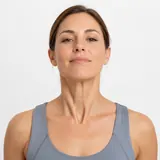
Jawline Massage is a moderate-pressure glide along the lower face. Start where the cover shows: fingertips on the lower cheeks just outside the mouth corners, above the mandible—not on the throat—then travel outward toward the ears. The goal is less masseter grip, warmer tissue along the jaw edge, and a cleaner line in the mirror. Eyes may close; the jaw stays unlocked.
Use a drop of oil or serum. Place the pads of the fingers of both hands on the lower cheeks near the mouth corners, above the mandible—matching the cover’s starting press. Thumbs can steady lightly under the jawline without choking pressure. From that placement, glide outward toward each ear in 4–5 seconds at about 4/10 pressure. Skin pink, not white. Keep the mouth soft; resting the tongue on the palate helps some people unclench. Five passes per side make one round; rest, then a second round. Stop for sharp TMJ joint pain—ease off the joint line itself if tender.
Sit tall, chin slightly free—not jammed to the chest. Hair off the jaw. Oil ready. Soften the lips before the first stroke.
Inhale as fingers land near the mouth corners. Exhale on the glide toward the ear. Let the jaw hang a few millimeters between passes.
Short mirror phrases — calm, specific, easy to repeat between reps.
“Corners to ears, not chin to throat.”
“Four out of ten—firm, not punishing.”
“Mouth soft on every stroke.”
“If the joint complains, lighten and shorten.”
Realistic checkpoints — form, sleep, and SPF still matter more than any single drill.
Easier end-of-day unclench; jaw often feels warmer and less “stuck” after evening rounds most weekdays.
Resting photos may show a slightly cleaner jaw edge when sleep and posture improve; less morning puff along the mandible.
Light jaw release starts to feel like a habit after screen blocks. Chronic grinding still needs dental/sleep work.
Maintenance: fewer catch-up massages to keep the masseter quiet. Softens a clenched jaw look; does not stop aging or replace clinical TMJ care.
Form cues, safety notes, and how this drill differs from nearby guides.
No. It can ease mild clench fatigue. Locking, sharp clicks, or radiating pain need a clinician—not deeper massage.
Strongly preferred. Dry strokes on the jaw stretch thin skin and leave redness.
Five evenings a week with two short rounds is enough for most. Skip days when the joint is angry.
Wait for clearance. Early firm massage can displace product.
Pads match the cover and are safer. Knuckles only with lots of oil and lower pressure.
A fresh massage leaves the jaw softer; hard puckering can switch the masseter back on. Separate them by an hour or a day.
Chewing side and sleep side often are. Give that side one extra slow pass—do not punish it.
Yes—matches the cover. Open the eyes if you need to check that you stay off the throat.
Share how this guide worked for you. Reviews appear after moderation.
No public reviews yet — be the first to rate this guide.
Reviews are moderated before they appear publicly.